About
My Role
Product Design Lead
Design Strategy, Rapid Prototyping, User Researcher
project type
Net New Concept
duration & status
2 Months
Production Ready
demo
Opportunity to define a dedicated experience that could translate complex installment logic into something participants could confidently understand and act on.
About the product
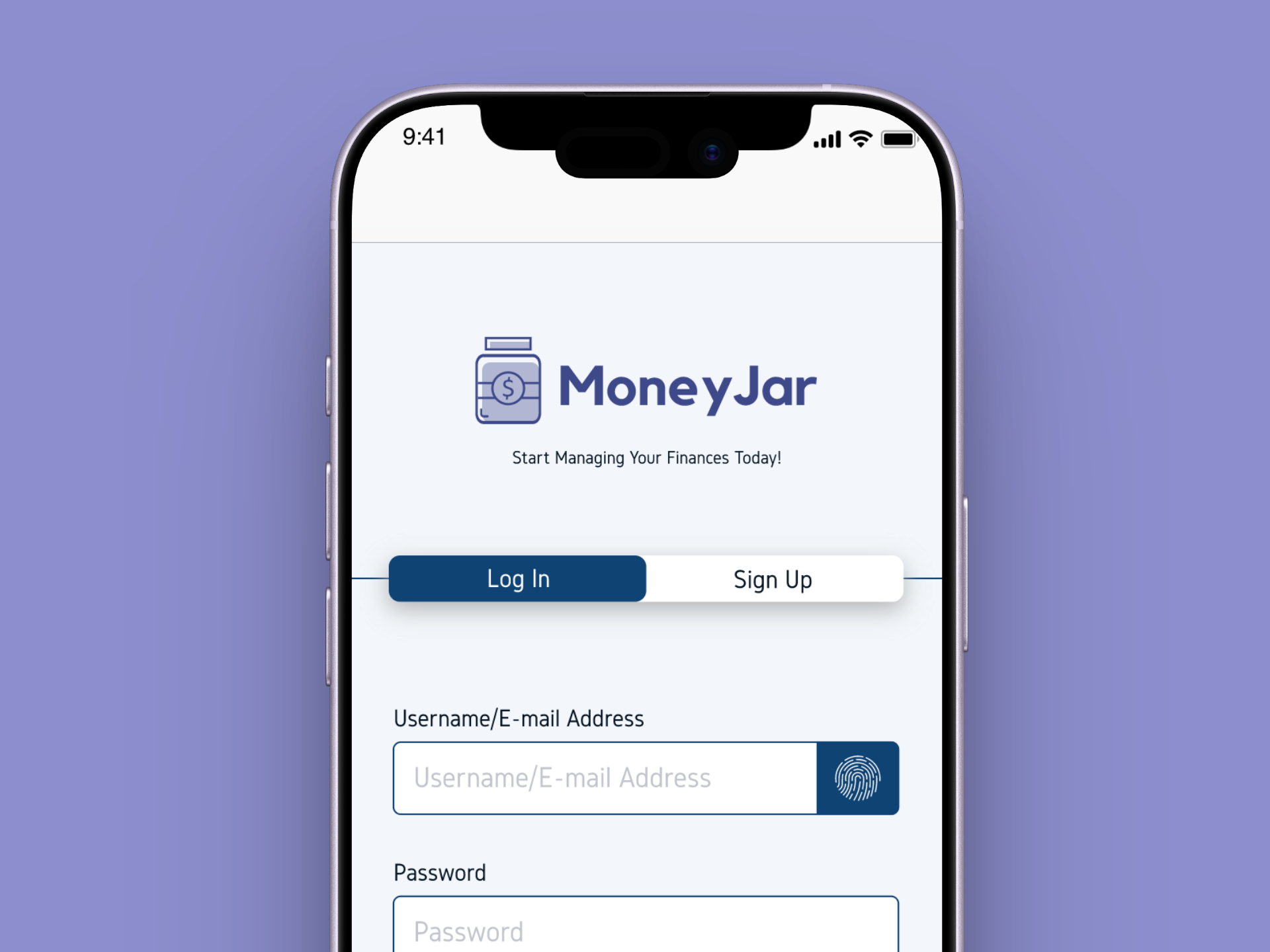
Application design to assist users with their financial goals by leveraging human factors knowledge about finances and money, incorporating emerging technologies and specific e-learning resources geared towards financial literacy.
Determining the Targeted Users
- Target Demographic(s):
- 18 - 35+ years old
- Content Use:
- Mobile app, for regular on-the-go use
- Application Benefits:
-
- Encourages users to save and track expenses
- Be aware of money flow
- Set an achieve financial goals and tasks
- Personalize financial tracking to work for a user
- Help users exercise best financial practices
- Notify and inform users of where they could save money
Goals
Defining the core challenge and validating early assumptions
The user feels that the system is secure, credible, and visually appealing.
- How it was measured:
- SUPR-Q Evaluation
Identify which features will help users accomplish their short-term and long-term goals and determine whether they were successful or unsuccessful
- How it was measured:
- Feature-based Questionnaire
Determine 2-3 effective strategies for improving the user’s financial behavior
- How it was measured:
- Literature reviews and interview data
Evaluation Methods
guiding participants from orientation to understanding
User Journey
Participants begin the experience by narrowing their view using the Plan and Class year
filters at the top of the page. These controls allow them to quickly focus on the
installment streams that are relevant to their situation. Once filtered, the pare presents
content grouped by plan, followed by class-year cards that organize
installment information into manageable sections.
Within each class-year card, participants can expand accordions to view installment
streams and payment activity over time. This structure allows them to scan high-level information
first, such as whether a stream is active and how many payments remain, before choosing to engage with
more detailed payment history or upcoming schedules. The experience supports quick orientation while
enabling deeper exploration only when needed.
- Competitive Analysis
-
Provide opportunities to design around other product’s shortcomings and turn those into attractive features to convert customers
- Literature Reviews
-
Determine what human factors influence negative financial behavior
- Interviews
-
Helps to understand some of the underlying attitudes that respondents have towards their finances and money in general
- Questionnaires
-
Analyze existing features and identify desired features based on the participant’s preferences and pain points
- User Testing
-
To evaluate the navigability and learnability of our system so that users can easily adopt it
- SUPR-Q Evaluation
-
Determine whether it is credible/secure so our users will feel comfortable using it
Key Findings
Features that helped participants quickly understand their installment payments while supporting the complexity of non-qualified plans
Each feature was designed to reinforce orientation, reduce cognitive load, and scale across plans, class years, and installment configurations without introducting unnecessary friction.
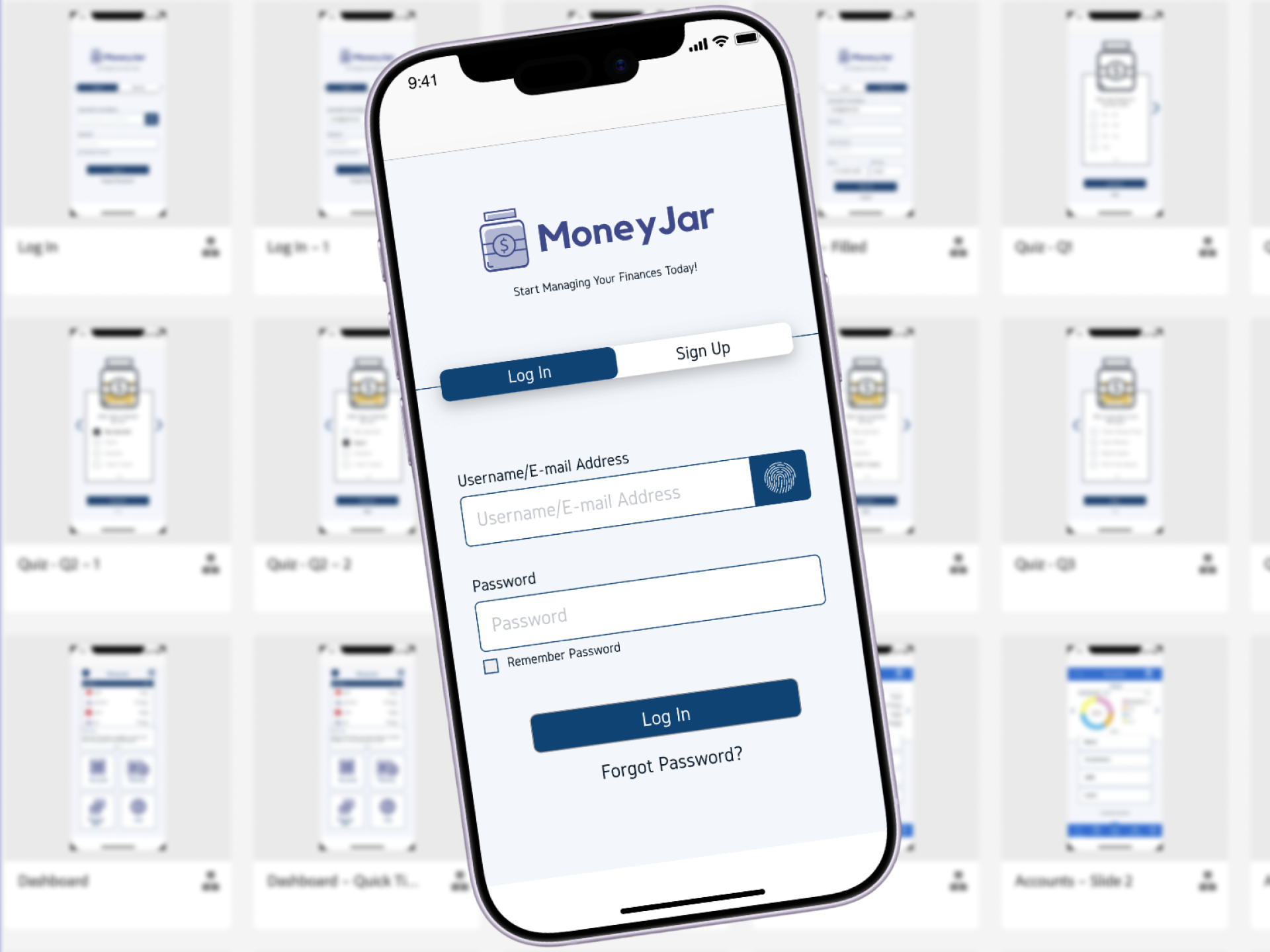
During interviews and usability testing, users preferred both methods of logging in: through their banking app and inputting their information manually.
Indication
This led to including multiple options for users to link their bank account.
Challenges
Confirming clarity, confidence, and scalability through testing
Because this was a net-new experience, validation focused on ensuring participants could accurately interpret installment information without guidance. The goal of testing is to confirm the concept supports the core user needs: identifying active streams, understanding progress, and anticipating the next payment. While also validating that the structure scales across common and edge-case configurations.
A/B Testing
- Purpose:
- Determining whether personalization will encourage users to create short-term and long-term goals
- Challenge Encountered:
- Prototype A and Prototype B did not differ enough to produce results that were beneficial
Usability Testing Prompts
- Purpose:
- Create a mindset for users when conducting a usability test
- Challenge Encountered:
- Testing prompted users as new users to the app but app had placeholder information that confused users
Literature Reviews
- Purpose:
- Research human factors that can be leveraged into the creation of differentiating features around long and short term saving
- Challenge Encountered:
- Application of the research was not solid
Most Challenging Feature: Goals & Budgets
- Tasks Objectjives When Testing:
-
- Set a Goal to save for a trip to Mexico
- Set a Budget to limit restaurant spending
- Challenge Encountered:
- Users expressed varying conceptions of how budgets and goals are related to each other.
- Relates to implication of finding 2:
- Add descriptors about what is considered a Goal and Budget
Demo
Thank you for reading!
Contents
don't be a stranger!
Let's collaborate and create something amazing!