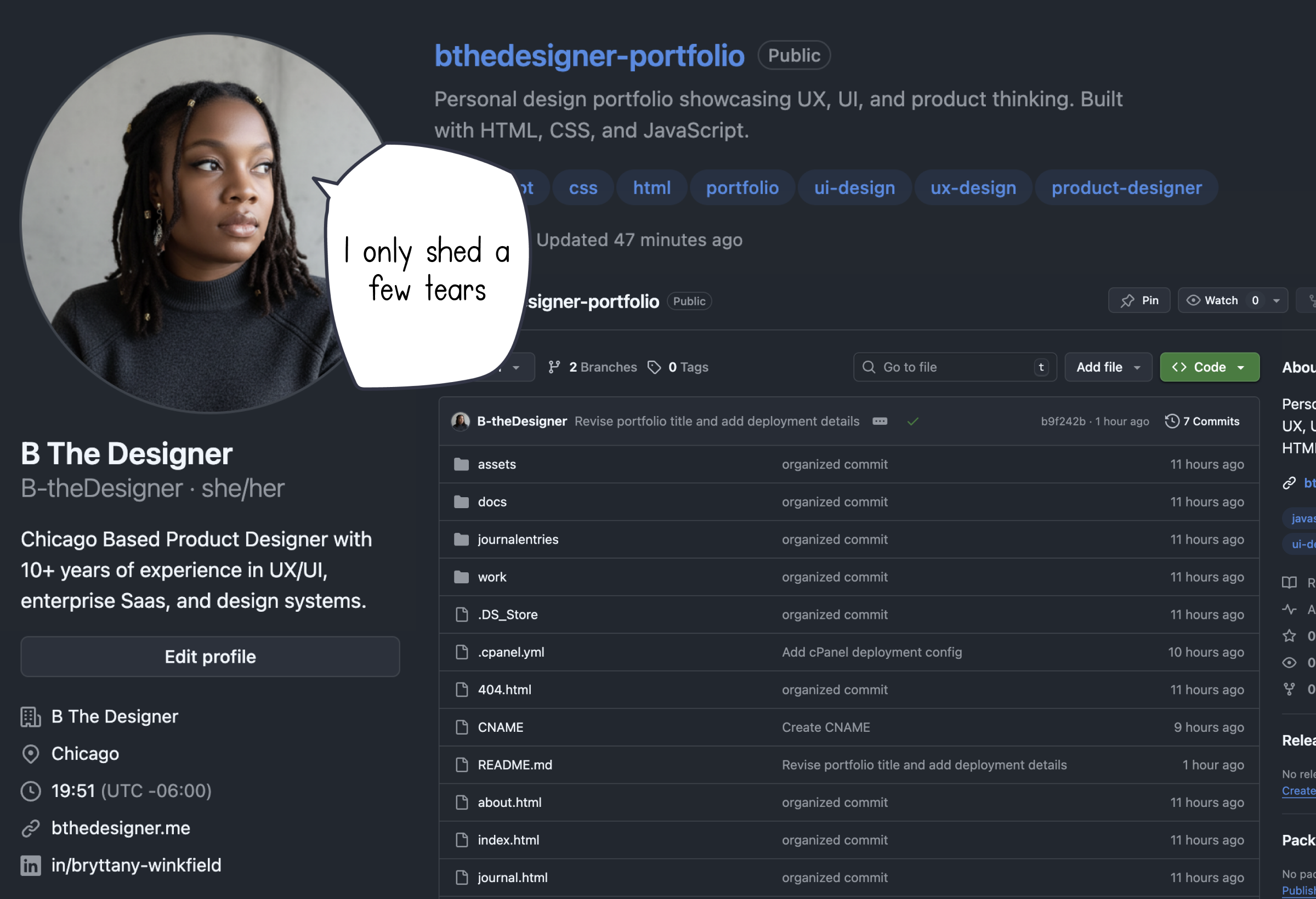
For a long time, my portfolio lived in an oddly familiar place:
locally coded on my machine... then manually uploaded into cPanel like it was 2012.
And honestly? It worked. Until it didn't.
Every update meant:
- reorganizing files locally
- uploading folders by hand
- hoping permissions didn't break
- and inevitably seeing a 403 Forbidden at least one.
The irony wasn’t lost on me: I was designing modern product systems while maintaining my own portfolio with a workflow that fought me every step of the way. This journal entry came out of deciding to finally close that gap.
What broke (and why that mattered)
The breaking point wasn't "learning Git" — it was operational friction. My hosting setup made iteration harder than it needed to be. Small changes felt risky. Structural updates felt fragile. Debugging felt opaque. That friction mirrors exactly what we try to remove for users. Once I framed it that way, the solution became obvious: treat my portfolio like a product, not a folder.
What I learned
This transition forced me to really understand:
- how Git tracks file moves and history
- what "behind the remote branch" actually means
- how merges, conflicts, and deployment pipelines work in practice
- how DNS, SSL, and hosting are systems, not magic
Moving to GitHub Pages wasn't just about hosting — it was about owning the workflow end to end.
My new reality:
- how local code stays local
- GitHub is the source of truth
- git push is deployment
- infrastructure fades into the background (as it should)
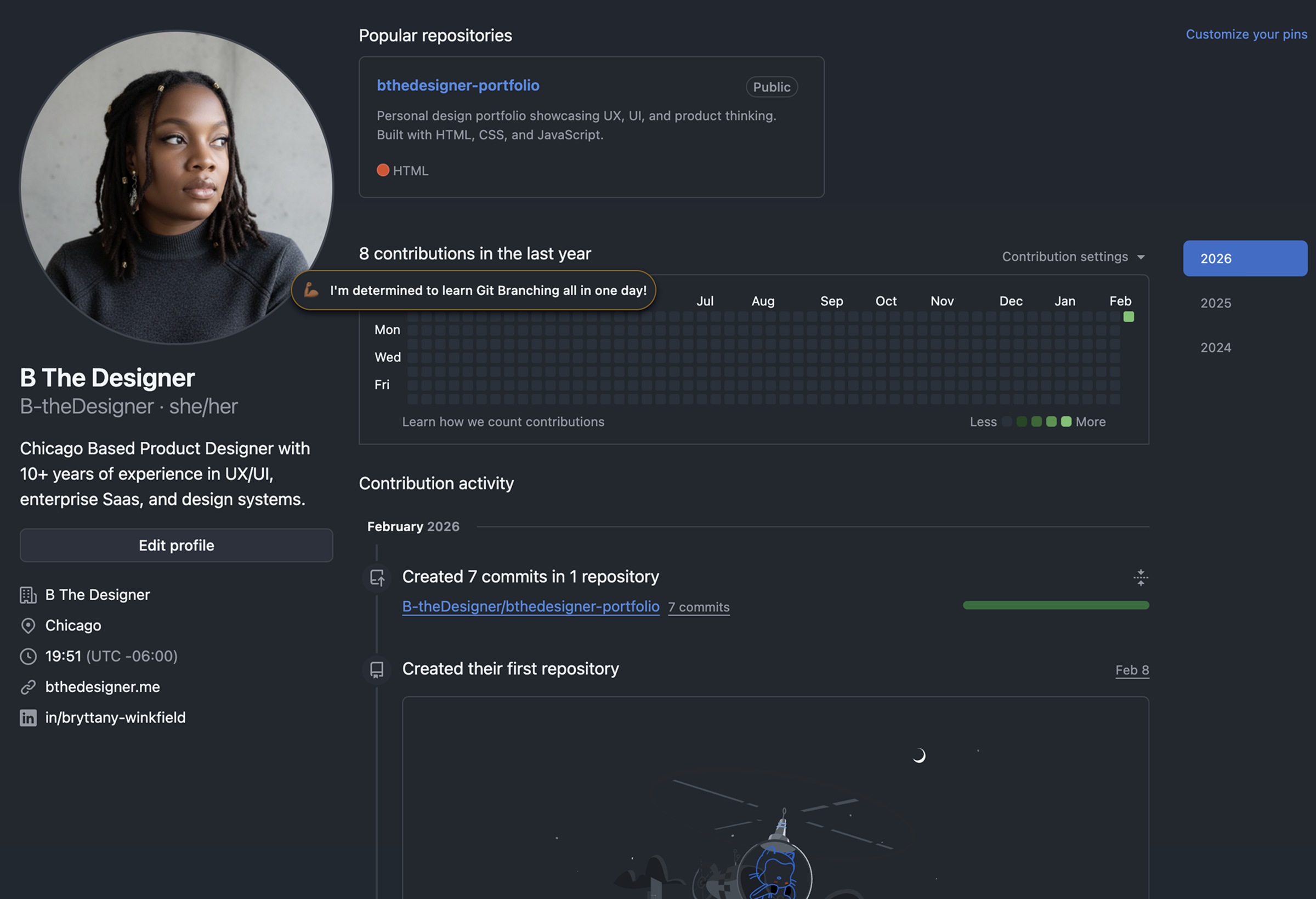
How I used AI (intentionally)
AI didn't "do it for me." It acted as:
- a translation layer when Git errors were unclear
- a rubber duck for debugging deployment issues
- a guide for understanding why something failed, not just how to fix it
The biggest value wasn't speed – it was confidence. Confidence to keep going instead of backing out when things broke.
Why this matters to my work
This wasn't about becoming a developer overnight. It was about:
- reducing friction in my own systems
- understanding the constraints engineers work withing
- designing with more empathy for technical workflows
- and choosing tools that scale with iteration, not agaisnt it
My portfolio didn't just get a new host. It got a workflow that finally matches how I think and build.
Drum Roll Please
The results